Mertens-Talcott et al. 2008
12 healthy adults, single dose
Anthocyanins from açaí reach the blood. Plasma antioxidant capacity also rose after the apple-sauce control.
Know the fruit
A small purple fruit from a rainforest palm. Mostly seed, wrapped in a thin coat of pulp — and that thin coat is everything we sell.
Everything on this page is sourced. It describes açaí in general, not a promise about our product. Our own batch will be lab-tested and the results published.
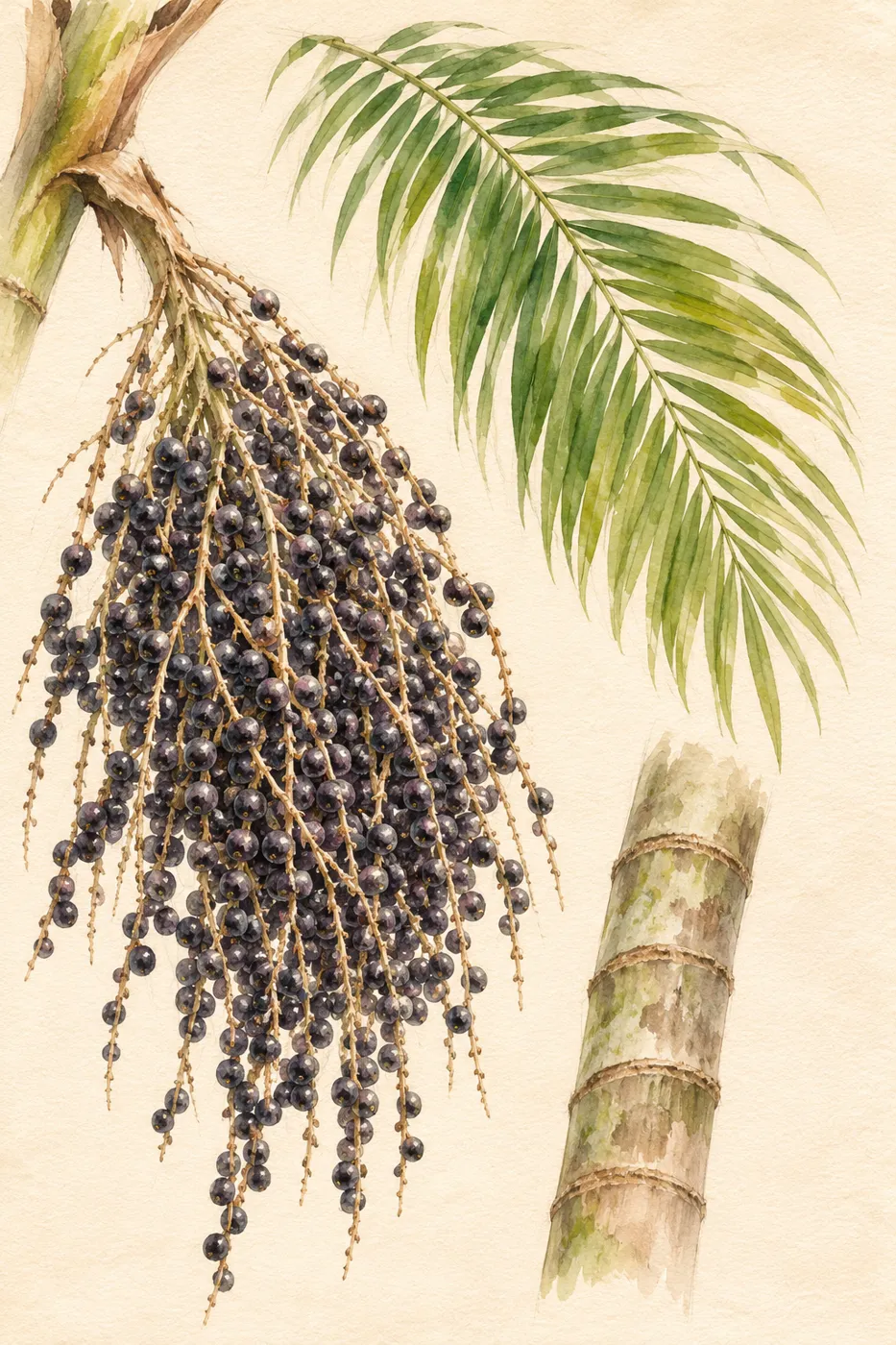
Inside one fruit
An açaí fruit is about the size of a blueberry, but it is built completely differently. It is a drupe: a hard, fibrous seed inside a skin with a thin, oily layer of pulp — around a millimetre thick.
In the wild açaí of the western Amazon (Euterpe precatoria), skin and pulp together are only about a third of the fruit’s weight; the seed is the rest. Other sources report even less, so we will weigh it ourselves in the pilot.
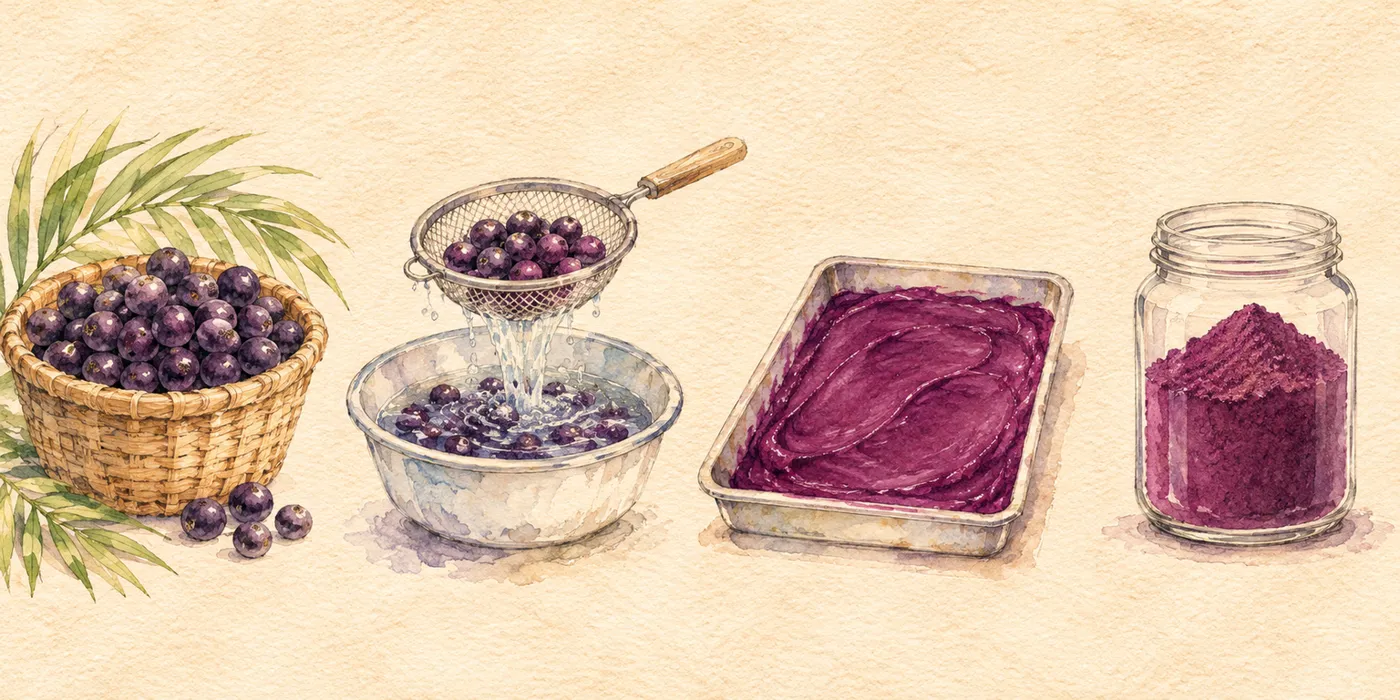
You can’t just eat açaí like a berry. The pulp is rubbed off the seeds with a little water, which turns it into the thick purple “vinho” Brazilians drink. Freeze-drying then removes that water again.
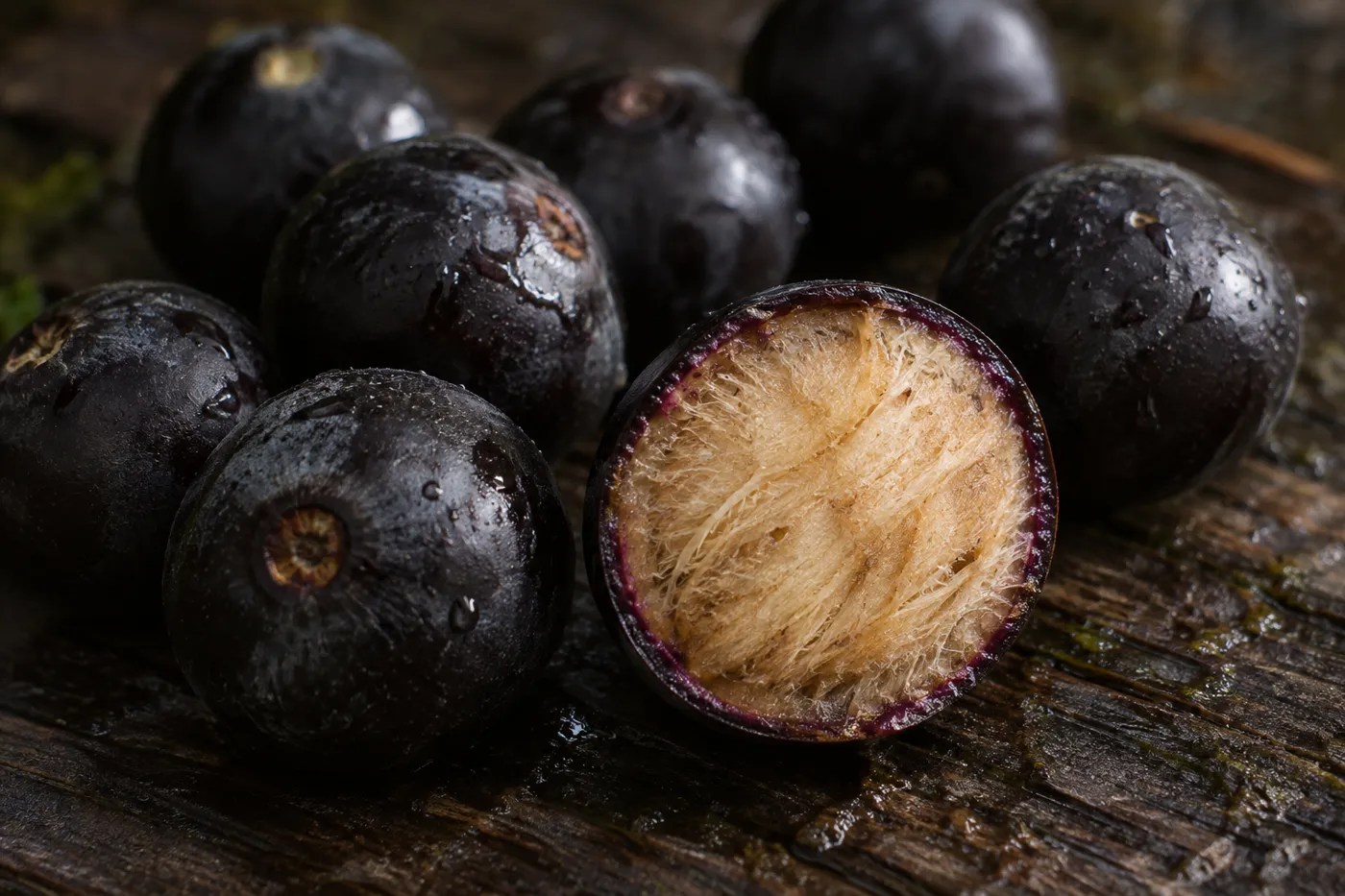
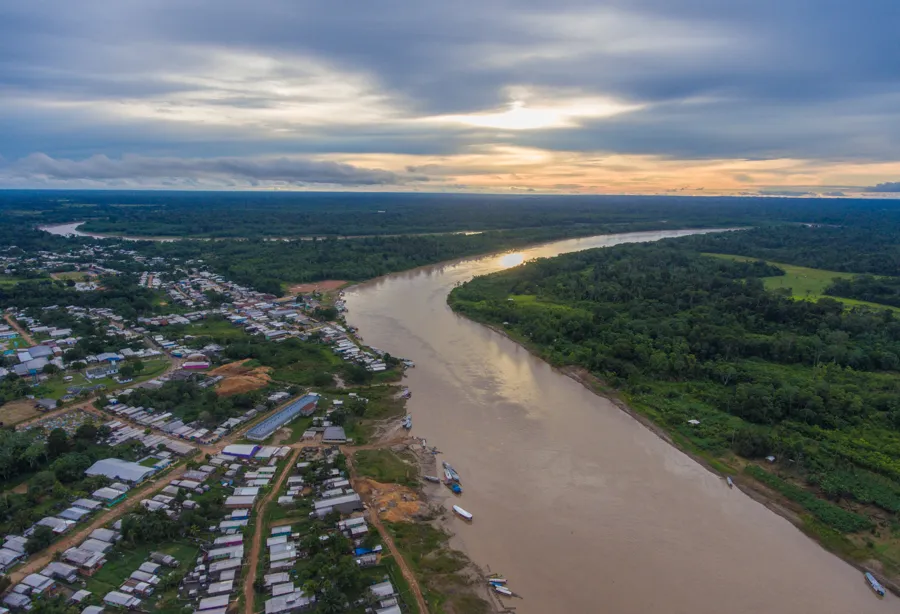
The palm around Envira
| Euterpe precatoria — “açaí-solteiro” | Euterpe oleracea — “açaí-do-pará” | |
|---|---|---|
| Grows | Single stem, wild in the western Amazon (Amazonas, Acre, Peru, Bolivia) | Clumps of many stems, Amazon estuary (Pará, Amapá); widely planted |
| Height | About 20 m on average, up to 35 m | 15–20 m |
| Anthocyanins (lab) | About 3,460 mg/kg | About 2,250 mg/kg |
| Loss at 80 °C (lab) | About 10 % | About 34 % |
| Harvest | One trunk per palm — it must be climbed, never felled | Several trunks; easier to reach |
Sources: Embrapa ComTec 29 (2005), Embrapa Acre Doc. 166 (2020), Pacheco-Palencia et al. 2009 (lab measurements, not health effects). Neighbouring Feijó in Acre holds Brazil’s first geographical indication for açaí, for wild E. precatoria.
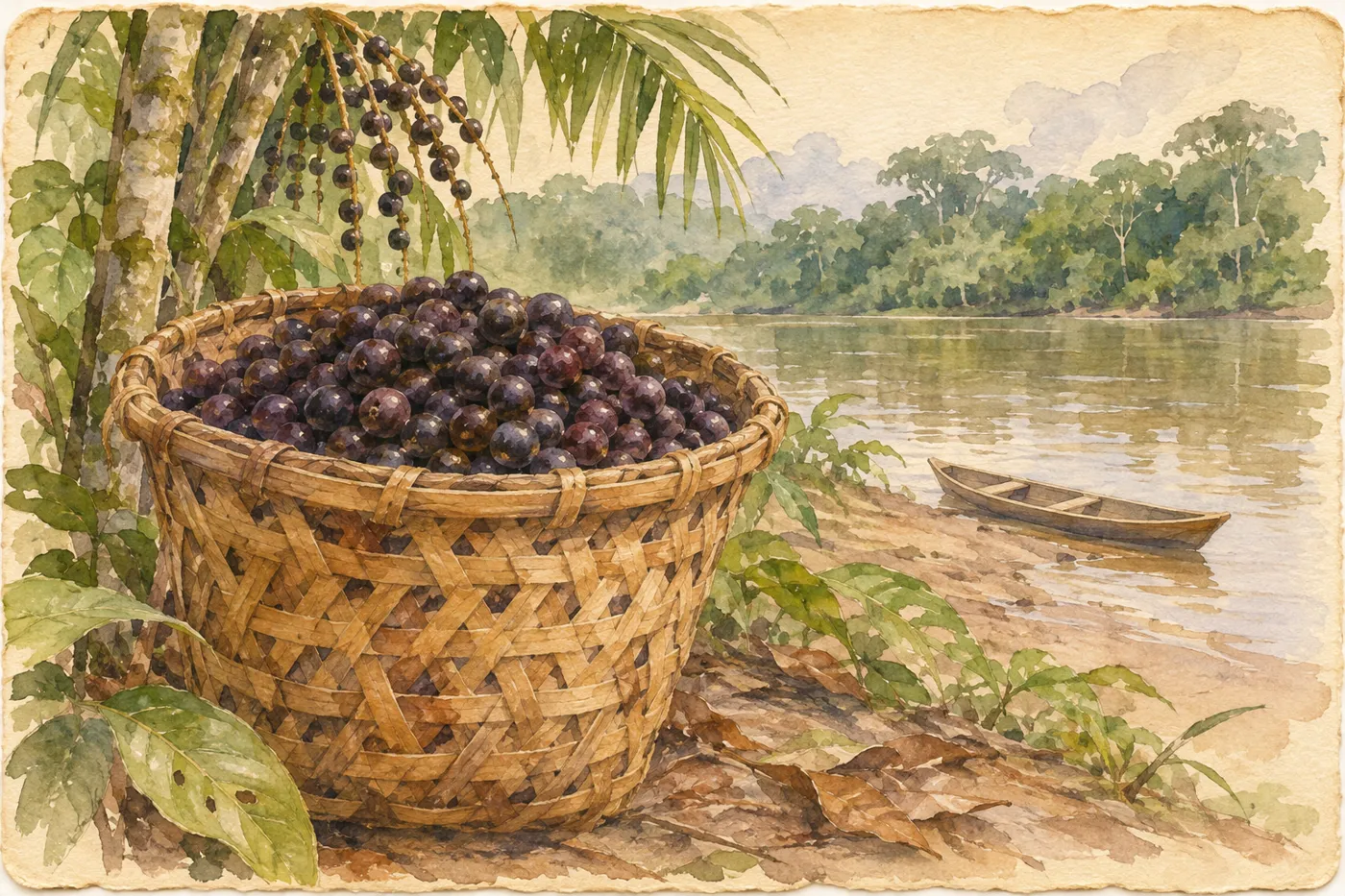
From palm to powder
Our rough estimate is 10–18 kg of fresh fruit for 1 kg of powder. That is a calculation, not a measurement — we will publish the real number from the pilot.
What’s inside
Published values for freeze-dried açaí pulp (Euterpe oleracea) per 100 g. They are literature values, not our product label — the powder from Envira may differ and will be lab-tested per batch.
| Per 100 g | Schauss et al. 2006 | Oliveira et al. 2020 |
|---|---|---|
| Energy | 534 kcal | 592 kcal |
| Fat | 32.5 g | 49.1 g |
| Fibre | 44.2 g | 20.3 g |
| Protein | 8.1 g | 9.2 g |
| Sugars | low | 2.7 g |
| Main fatty acid | Oleic acid, about 54 % of fatty acids | — |
| Anthocyanins | 319 mg | 127 mg |
Honest about science
Açaí has been studied in the lab and in a handful of small human studies. Here is a fair selection. None of this is a claim about our powder, and açaí is not a medicine.
12 healthy adults, single dose
Anthocyanins from açaí reach the blood. Plasma antioxidant capacity also rose after the apple-sauce control.
10 overweight adults, open pilot, no control group
Some blood values changed over 30 days. No placebo, very small, industry-funded.
23 overweight men, randomised crossover, single dose
A short-term change in a blood-vessel function measurement after an açaí smoothie.
37 adults, 12 weeks, placebo-controlled
Two stress markers changed; blood sugar and blood fats did not. The authors call it weak evidence.
69 adults, 60 days, placebo-controlled
One oxidative-stress marker changed; blood fats and blood sugar did not.
12 men, placebo-controlled
The only human study we found with dried Euterpe precatoria — the species around Envira. Very small.
In one sentence: the colour pigments of açaí are absorbed by the body, and small studies saw short-term changes in some blood markers — but there is no solid evidence for effects on blood fats, blood sugar, weight or disease. The US National Center for Complementary and Integrative Health says the same. We sell açaí as what it is: a remarkable fruit.
Did you know
Each fruit is a hard seed wrapped in a thin layer of skin and pulp. In the wild açaí of the western Amazon that layer is only about a third of the fruit’s weight.
Yuyama et al. 2011, Acta Amazonica
Around Envira, açaí grows on single-stemmed palms (Euterpe precatoria) that average about 20 m and can reach 35 m.
Embrapa Acre, Doc. 166 (2020)
Harvesters climb with a peconha, a simple foot loop made of palm leaf or sacking, and cut the bunch with a knife.
Embrapa, Cultivo do açaizeiro, ch. 16
One bunch weighs 2–11 kg; about 70 % of it is fruit.
Embrapa Acre, Doc. 166
Açaí does not ripen after picking. Around 20 % of its anthocyanins can be gone about 10 hours after harvest.
Embrapa Acre, citing Schwob 2012 and others
Brazil requires the fruit to be blanched and the pulp pasteurised at 80 °C or more for at least 10 seconds.
MAPA IN 37/2018
Unlike most fruit, açaí pulp is rich in fat — mostly oleic acid, the main fatty acid of olive oil — and low in sugar.
Schauss et al. 2006; Oliveira et al. 2020
The deep colour comes from anthocyanins, mainly cyanidin-3-glucoside and cyanidin-3-rutinoside.
Schauss et al. 2006
In Brazilian law, “açaí” means pulp from two palms: Euterpe oleracea (multi-stemmed, Pará) and Euterpe precatoria (single-stemmed, western Amazon).
MAPA IN 37/2018
Brazil harvested about 2 million tonnes of açaí in 2024. Roughly 9 in 10 tonnes came from the state of Pará.
IBGE SIDRA 1613 / 289
Açaí is Brazil’s most valuable non-timber forest product.
IBGE PEVS 2023
Brazilian rules allow “dehydrated açaí” to contain maltodextrin as long as at least 20 % of the solids are açaí.
MAPA IN 37/2018
Envira in numbers
Sources
Collected on 5 November 2026. Lab values describe açaí in general; they are not nutrition or health claims for our product.